About
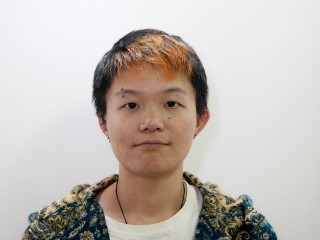
Kia ora, Hello! I am a PhD student at the University of Otago, New Zealand, supervised by Prof. Ceridwen Fraser and Dr. Alana Alexander. I am studying about the population genomics of buoyant kelp (Macrocystis pyrifera | giant bladder kelp or Rimurimu in Maori and Durvillaea antarctica | southern bull kelp or Rimurapa in Maori) around the Southern Ocean, and whether they could establish in Antartctica in the future. My methods include population genomics (genotyping-by-sequencing), physiological tolerance experimentation as well as ecological modelling.

Why study this?
Antarctica has long been considered to be isolated, with strong oceanographic barriers preventing species - except those that can swim or fly long distances - from reaching it. Antarctica has also been seen as a pristine land largely untouched by humans, with no permanent human settlements other than research stations. However, exciting emerging research is challenging both assumptions. Non-indigenous invertebrates, mosses, grass and seaweeds have been discovered along Antarctic coasts, while human activities have been rapidly increasing over the past decades, actively introducing exotic species. Buoyant kelp (particularly southern bull kelp Durvillaea antarctica and giant bladder kelp Macrocystis pyrifera) can travel thousands of kilometres from one coast to another, and reproductively viable kelp originating from sub-Antarctic islands such as South Georgia has been found washed up on Antarctic beaches. Secondly, various organisms (molluscs, polychaetes, arthropods, echinoderms etc.) can hitchhike with rafting kelp, for example within kelp holdfasts. Based on modelling, we now think that such events have been happening frequently and for a long time, with establishment only prevented - for now - by the extreme iciness of Antarctica. There is a pressing need to study the origins, sources, dispersal trajectories and Antarctic viability of these marine species, which seem poised to establish along Antarctic coasts in the future.
You can learn more about our project through these publications:
- Fraser CI et al. (2018). Antarctica’s ecological isolation will be broken by storm-driven dispersal and warming. Nature Climate Change 8, 704–708. https://doi.org/10.1038/s41558-018-0209-7.
- Fraser CI et al. (2022). Southern Hemisphere coasts are biologically connected by frequent, long-distance rafting events. Current Biology 32(14), 3154-3160. https://doi.org/10.1016/j.cub.2022.05.035.

Want to learn about Antarctic genetic/genomic resources? Have a look at this paper!
- Liu XP, Duffy GA, Pearman WS, Pertierra LR, Fraser CI (2022). Meta-analysis of Antarctic phylogeography reveals strong sampling bias and critical knowledge gaps. Ecography : 2022(12). Doi: 10.1111/ecog.06312.
 Liu et al. (2022). Fig.2: Geographic patterns of numbers of genetic records of (a) animals, (b) embryophyte plants and (c) lichen/fungi/algae in the Antarctic region and (d) associated sampling distance to nearest research stations (hollow circles), from 153 Antarctic terrestrial phylogenetic studies. Values were calculated in 100 km2 cells (zero values not shown).
Other publications
- Pertierra LR et al. (2025). Advances and shortfalls in Antarctic terrestrial biodiversity science. Science. 387(6734), 609-615. Doi: 10.1126/science.adk2118.
- Pertierra LR et al. (2024). TerrANTALife 1.0 Biodiversity data checklist of known Antarctic terrestrial and freshwater life forms. Biodiversity Data Journal . 12: e106199. Doi: 10.3897/BDJ.12.e106199.
- McGaughran et al. (2024). Genomic tools in biological invasions: current state and future frontiers. Genome Biology and Evolution . 16(1), evad230. Doi: 10.1093/gbe/evad230.
- Pearman WS, Duffy GA, Liu XP, Gemmell NJ, Morales SE, Fraser CI (2024). Macroalgal microbiome biogeography is shaped by environmental drivers not geographic distance. Annals of Botany. 133(1), 169-182. Doi: 10.1093/aob/mcad151.
- Damen B et al. (2017). Climate Action for Agriculture: Strengthening the role of scientific foresight and climate-smart agriculture in addressing NDC priorities. Food and Agriculture Organization of the United Nations (FAO). Rome, Italy: FAO. [https://www.fao.org/publications/card/en/c/b881dba6-da51-43b3-a6eb-a83c735b0927]
In review
- Liu XP, Alexander A, Bax N, Bond D, Fraser CI (in review). Genomic analyses of giant kelp reveal restricted connectivity across the Southern Hemisphere and striking diversity in Aotearoa (New Zealand). Submitted to Journal of Phycology.
- Liu XP, Wilson-Dennis L, Fulton CJ, Fraser CI (in review). Different dispersal mechanisms shape multi-scale genetic diversity in habitat-forming Sargassum along the Ningaloo coast, Western Australia. Submitted to Ecology and Evolution.
- Duffy GA, Liu XP, Graham B, Pearman WS, Ryder FJ, Lamare MD, Fraser CI (in review). Rafting bull kelp could establish in Antarctica in the future, but will be under threat in much of its temperate native range. Submitted to Journal of Phycology.
Conference presentations
- Liu XP, Alexander A, Bax N, Bond D, Fraser CI (2025). Genotyping-by-sequencing of Macrocystis pyrifera supports population connectivity across Aotearoa New Zealand, Tasmania and the Falkland Islands. Verbal presentation at the 39th Australasian Society for Phycology and Aquatic Botany annual meeting, Wellington, New Zealand.
- Liu XP, Bax N, Duffy GA, Fraser CI (2024). Navigating Antarctic currents: Fine-scale population genomics of buoyant kelp around the sub-Antarctic islands and New Zealand offers insights into kelp dispersion to Antarctica. Poster presentation at the XI Scientific Committee on Antarctic Research (SCAR) Open Science Conference, Pucón, Chile.
- Liu XP, Alexander A, Duffy GA, Fraser CI (2023). Genetic/genomic resources for biogeographic research in terrestrial Antarctica. Verbal presentation at the XIII Scientific Committee on Antarctic Research (SCAR) Biology Symposium, Christchurch, New Zealand.
- Liu XP, Alexander A, Duffy GA, Fraser CI (2023). Will rafting sub-Antarctic kelp and its passengers become established in Antarctica? Verbal presentation at the MBE Regional Meeting on The Role of the Genome in Biological Invasion, Hamilton, New Zealand.
- Liu XP, Duffy GA, Pearman WS, Pertierra LR, & Fraser CI (2022). Genetic/genomic resources for biogeographic research in terrestrial Antarctica. Poster presentation at the Proceedings of the Genetics Otago (GO) Annual Symposium, Dunedin, New Zealand.
- Liu XP, Duffy GA, Pearman WS, Pertierra LR, & Fraser CI (2022). Genetic/genomic resources for biogeographic research in terrestrial Antarctica. Poster presentation at the 31st Queenstown Molecular Biology Meeting (QMB), Queenstown, New Zealand.
- Liu XP, Pearman WS, & Fraser CI (2021). Genetic/genomic resources for biogeographic research in Antarctica. Verbal presentation at the Proceedings of the New Zealand Antarctic Science Conference: Connecting through change, Christchurch, New Zealand.
Science communications
- Guest on science podcast Coffee & Geography (Feb 2026)
- Story featured on the cover of University of Otago postgraduate news Te Pānui Taura (Apr 2025)
- Visiting scientist on board National Geographic–Lindblad Expeditions to Antarctica and Patagonia (Feb-Mar 2025)
- Guest symposium at Departamento de Oceanografía, Universidad de Concepción, Chile (Sep 2024)
- Visiting scientist on board BLAKE NZ expedition to Motu Ihupuku Campbell Island (Feb 2023)